

script here, whatever engine you asked for. SQL only reaches Polars when you request it explicitly.
Modes
SQL query
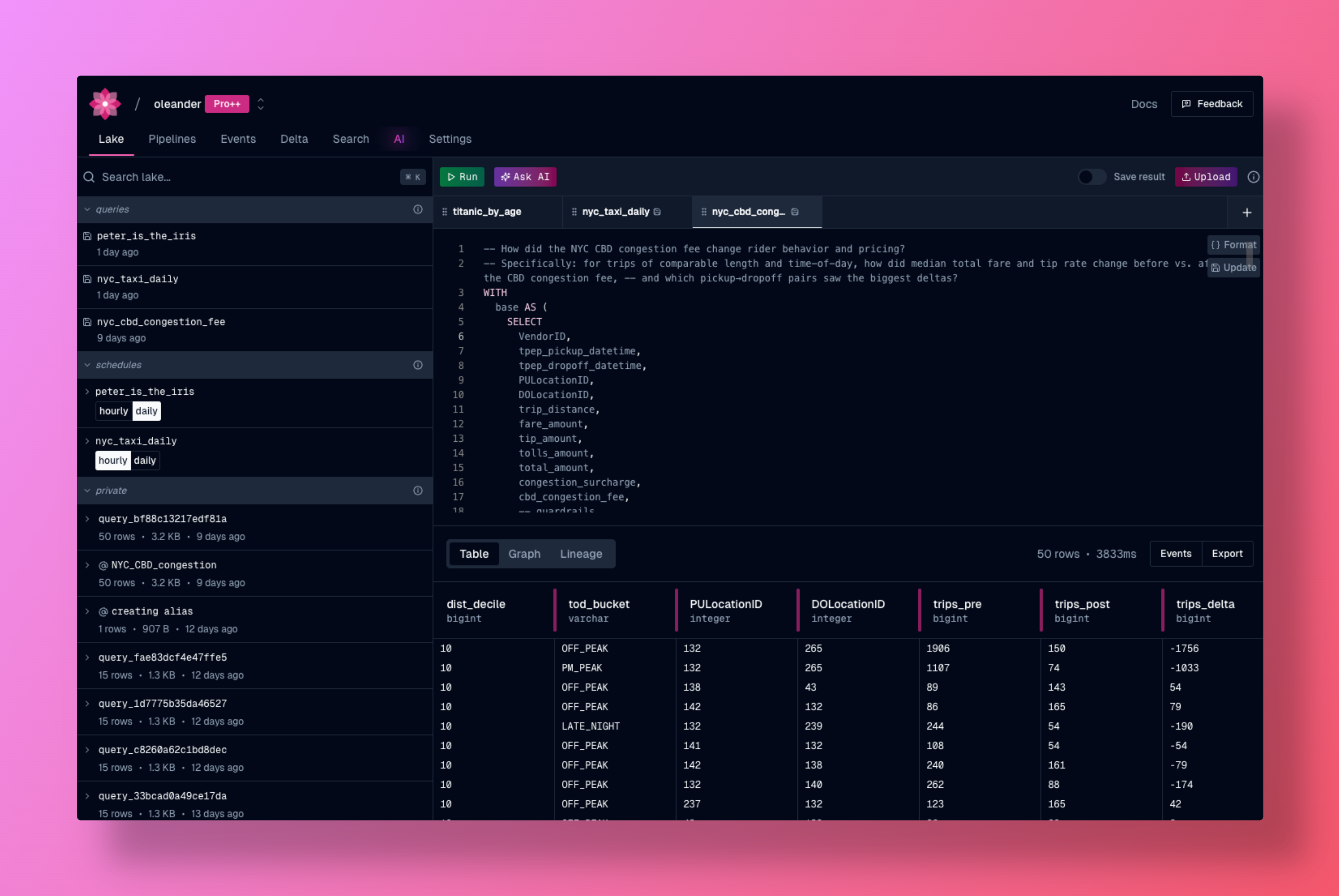
Run a Polars SQL expression against one or more registered lake tables. This is the fastest way to explore data without writing Python.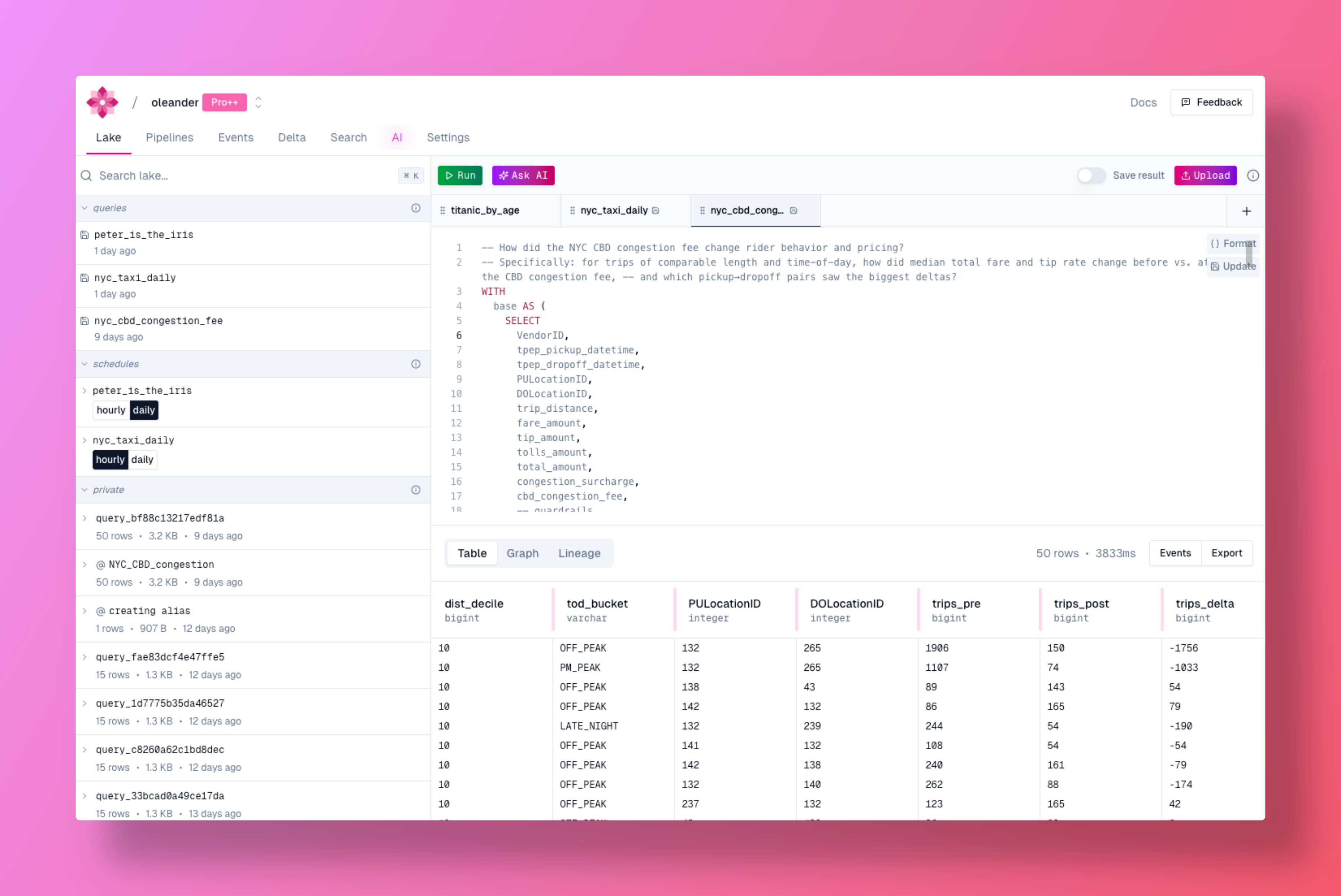
Python script
Write a Python script using the Polars DataFrame API. oleander injects the runtime, auth, and catalog - your script only needs to assignresult.
The following are available in scope without any imports:
Your script must assign its output to
result - a Polars LazyFrame or DataFrame. oleander handles .collect() and distributed dispatch; do not call them in your script.
Distributed execution
Enable distributed mode to run your workload on Polars Cloud instead of a local sandbox. This is useful for large datasets that exceed sandbox memory.Saving results
Results can be written back to a table in your Iceberg catalog. Chooseoverwrite to replace the table or append to add rows to an existing one.
CLI & API
Polars workloads can also be triggered programmatically:- CLI:
oleander polars - API:
POST /api/v1/warehouse/polars